
Creating the ideal dining atmosphere begins with precise furniture dimensions. Properly sizing your dining room furniture enhances both aesthetic appeal and functionality.
Ensuring sufficient clearance space around your dining pieces facilitates smooth movement and accessibility, essential for an enjoyable dining experience.
Accurate measurements are necessary to avoid costly errors, making this guide your invaluable resource for fitting your dining room seamlessly.
Click here to learn more about: www.globalvisioncompany.com
Choosing the Right Dining Table Dimensions
The selection of dining table dimensions plays a significant role in achieving a comfortable and inviting space.
Most dining tables typically measure between 28 to 30 inches in height, a factor that greatly influences chair size and overall comfort. For a formal dining experience, larger tables—around 60 inches or more—are advisable to accommodate guests comfortably.
In contrast, casual settings often benefit from smaller, round tables that promote intimacy.
Tip: To tailor your choice to a specific size, measure your dining area carefully. Use painter’s tape to visualize the table’s footprint, ensuring ample room for movement and furniture arrangement.
Considerations for Table Dimensions
- Seating Capacity: Assess the number of diners to determine table size.
- Room Layout: Think about the overall room layout and how the table will fit within it.
- Style Compatibility: Choose a table shape that matches your décor style, whether traditional or modern.
Accurate measurements ensure optimum space planning and a harmonious dining area. When selecting tables, consider ergonomic design for comfort level and visual balance. Use a size chart as a reference to verify standard sizes and avoid mismatches between table height and chair dimensions.
Additionally, multifunctional pieces such as extendable tables can provide flexibility for both family gatherings and entertaining spaces. Ultimately, successful furniture selection will enhance your dining experience, creating the ambiance you desire.
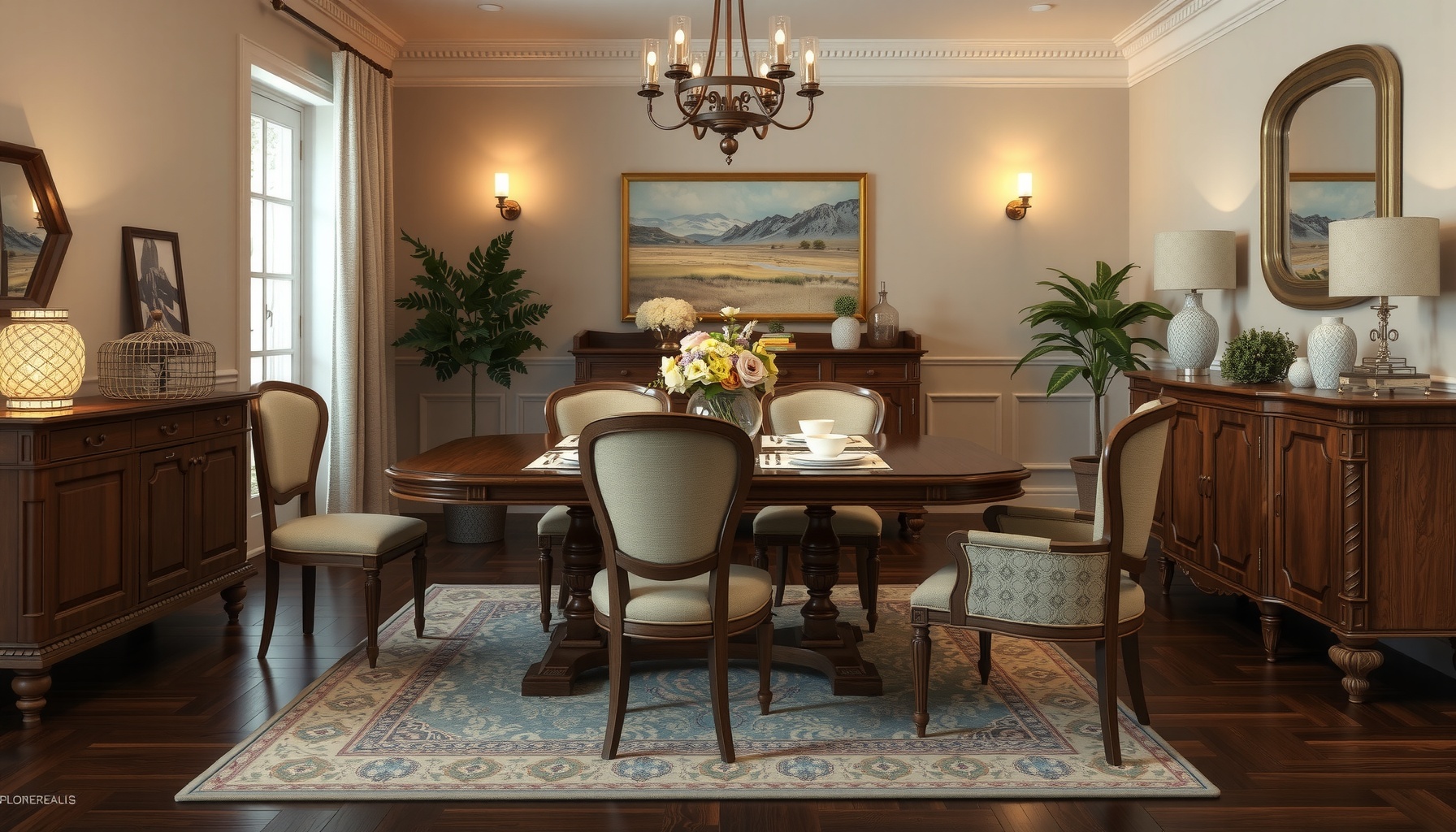
How to Determine Seating Capacity
Assessing seating capacity plays a significant role in enhancing the overall dining experience. To effectively gauge the number of guests, it’s important to consider table shape and size.
For round tables, industry standards suggest seating 4-6 guests comfortably, depending on the dimensions.
Conversely, rectangular tables can ideally accommodate 6-8 guests.
Maintaining comfortable seating arrangements requires a minimum of 24 inches of chair spacing to allow freedom of movement. Flexibility is essential when hosting various gatherings; for instance, block seating arrangements can facilitate larger groups, while smaller setups create an intimate atmosphere for personal dining experiences.
Effective Space Planning for Dining Areas
Planning the dining area effectively can greatly enhance functionality and guest experience.
Prioritizing flow and access ensures guests navigate easily around the table. Allowing movement around the dining table enhances comfort; maintain pathways of 36 inches between furniture to promote ease.
Zoning techniques help create distinct dining and serving areas, thereby optimizing functionality.
Consider designating a lounge area for socializing before meals.
A practical layout, such as an L-shaped dining setup, maximizes space usage while ensuring comfortable movement during gatherings.
- Round tables typically seat 4-6 guests, while rectangular tables seat 6-8 guests.
- A minimum of 24 inches of chair spacing is recommended for comfortable movement.
- Pathways of 36 inches between furniture enhance guest navigation and comfort.
- An L-shaped dining layout can optimize space while allowing for easy movement during gatherings.
Understanding Room Layout for Furniture
Effective room layout significantly enhances the dining experience and overall aesthetics. Dining table placement heavily influences the room’s visual flow, with strategic positioning optimizing sight lines.
Sight lines play a key role in seating arrangements, ensuring guests can easily engage with one another, creating a welcoming atmosphere.
The impact of various light sources—both natural and artificial—affects the mood during meals, heightening the dining experience.
When exploring space planning, consider using graph paper or digital tools to sketch potential layouts, allowing you to visualize how best to arrange your dining area.
The Role of Seating Arrangements
Effective seating arrangements enhance comfort level and encourage interaction among guests. Thoughtful arrangements ensure adequate clearance space around the dining table for movement.
Creating an inviting dining area invites positive conversations and enjoyable gatherings.
Importance of Light Sources
The placement of light fixtures can transform the atmosphere of your dining area. Different lighting styles contribute to the overall ambiance by providing warmth or brightness as needed.
When planning for lighting, ensure it aligns with your color scheme and enhances the aesthetic appeal of the room.
The Impact of Table Shape on Design
Choosing the right table shape plays an integral role in maximizing social interactions during meals.
Round tables create an inclusive atmosphere, fostering easier conversations.
On the contrary, rectangular tables can delineate groups, creating distinct zones for larger gatherings. The shape also affects movement and overall comfort; for instance, wider tables require more clearance space.
Compatibility with various chair styles is essential to maintain aesthetic coherence and ensure comfort.
Advantages of Round vs. Rectangular Tables
- Round tables promote intimacy and ease of conversation.
- Rectangular tables suit larger groups, providing space for multiple dishes.
Selecting Shapes Based on Room Dimensions
When evaluating table shape, consider your room dimensions to maximize space optimization and enhance the dining experience. A good rule of thumb is to ensure that the table complements the furniture arrangement without overwhelming the room. For example, if your dining area follows an open floor plan, a round table can create a more fluid visual flow.
Room Layout for Furniture
- Strategically placed dining tables improve sight lines, enhancing guest interaction.
- Effective seating arrangements promote comfort and facilitate movement around the table.
- Appropriate lighting fixtures can significantly alter the dining area’s ambiance.
- Choosing the right table shape can maximize social interaction and optimize space in the room.
Selecting the Correct Chair Size
Choosing the right chair size is essential for enhancing your dining area experience. Chair dimensions must correlate with table height to ensure optimal comfort during mealtime.
Typically, standard dining tables range from 28 to 30 inches in height, making it ideal for your chair seat to sit 10-12 inches below to maintain a comfortable level.
Armrest height is also significant; aim for at least 3-4 inches of clearance between the armrests and the table edge.
Style compatibility with your dining area plays an important role in overall aesthetics. A practical tip is to trial different chair types to find the perfect fit before making a purchase.
Optimizing Clearance Space for Comfort
Ensuring adequate clearance space around your dining area enhances the overall dining experience.
Aim for at least 36 inches of clearance to encourage easy movement around the table.
In tighter spaces, a minimum of 30 inches may suffice, though it may restrict comfort.
Proper clearance facilitates seamless interactions, allowing guests to engage effortlessly.
For instance, in a small space measuring 10×10 feet, consider using painter’s tape to outline potential table shapes and chair placements, ensuring an optimal fit.
- Prioritize clearance space to enhance your dining ambiance.
- Adjusting for clearance distances will create a welcoming gathering space.
- Mind your room layout when arranging furniture for family gatherings.
Thoughtful space planning and furniture arrangement contribute significantly to a comfortable dining experience, making gatherings feel more intimate and engaging.
- Standard dining table heights typically range from 28 to 30 inches.
- Chair seat heights should ideally be 10-12 inches below the table height for comfort.
- A minimum clearance of 36 inches around the table is recommended for easy movement.
- Using painter’s tape can help visualize space and furniture arrangement in small areas.
Balancing Style Compatibility with Functionality
Selecting dining room furniture involves merging style compatibility with usability for an appealing setup. Establishing the theme of your dining area is important—whether you opt for a modern, rustic, or traditional design, coherence is key.
Making sure that the dining table and chairs are functional is essential for enhancing functional use.
Choosing Materials Wisely
- Materials: Select materials that offer harmony, such as wood finishes versus metal or fabric versus leather, while factoring in maintenance needs.
- Proportionality: Ensure that the dining table dimensions and chair size create a balance for comfort and accessibility in the space.
Timelessness vs. Trends
To balance trends with timeless designs, consider integrating classic elements, such as a farmhouse table. This approach can seamlessly adapt to evolving style trends with minimal updates, thus maintaining both aesthetic appeal and longevity.
For example, when considering table shape and clearance space, think about how these choices affect the dining experience. A well-planned furniture arrangement not only enhances functionality but also boosts the visual flow of your dining area.
Matching furniture styles while prioritizing usability creates an inviting and functional dining environment.
Ultimately, your choice of decorative accents and color schemes should complement both the dining table and chair styles, ensuring a cohesive look that feels both inviting and practical for family gatherings or entertaining spaces.
Dining Room Furniture Selection
- 70% of homeowners prioritize functionality over style when choosing dining room furniture.
- Well-chosen materials can reduce maintenance time by up to 40%, allowing for easier upkeep.
- Dining table shape significantly influences the number of guests that can comfortably be seated, impacting social gatherings.
- Incorporating timeless designs can extend the lifespan of furniture, saving money on replacements and updates.