
When selecting materials for woodworking projects, oak stands out due to its exceptional strength and beauty. Comparing oak with alternatives like cherry, maple, and pine reveals essential differences.
Oak showcases distinctive grain patterns and remarkable durability, making it an excellent choice for high-end cabinetry and flooring.
In contrast, softwoods may offer cost-effectiveness but often lack the structural integrity of hardwoods.
Ultimately, the best wood for your project depends on factors like desired aesthetics and intended use, ensuring you select the most fitting option for your needs.
Click here to learn more about: www.globalvisioncompany.com
Hardwood vs Softwood: Key Differences
Understanding the distinctions between hardwood and softwood is fundamental for achieving project success. Hardwoods, such as oak, typically demonstrate higher durability, making them ideal for furniture that withstands wear and tear.
By contrast, softwoods, like pine, are lighter and easier to manipulate, yet they require more frequent maintenance due to their lower resistance to dents. For example, oak, a hardwood, is extensively used in high-end cabinetry because of its exceptional aesthetic appeal and long-lasting qualities.
Meanwhile, softwoods serve as a practical choice for budget-friendly furniture options, balancing cost with functionality.
Renowned for its resilience, oak wood is a premier choice for lasting furniture and projects. The grain density of oak significantly contributes to its structural integrity, making it resistant to wear and tear.
Additionally, natural resistance to pests, such as termites, enhances oak’s appeal over softer woods like pine.
To maintain oak’s durability, consider applying a protective finish and regularly cleaning the surfaces.
Controlling humidity and temperature is essential to prevent issues like warping or cracking.
By paying attention to these factors, oak furniture can endure the test of time with enduring durability.
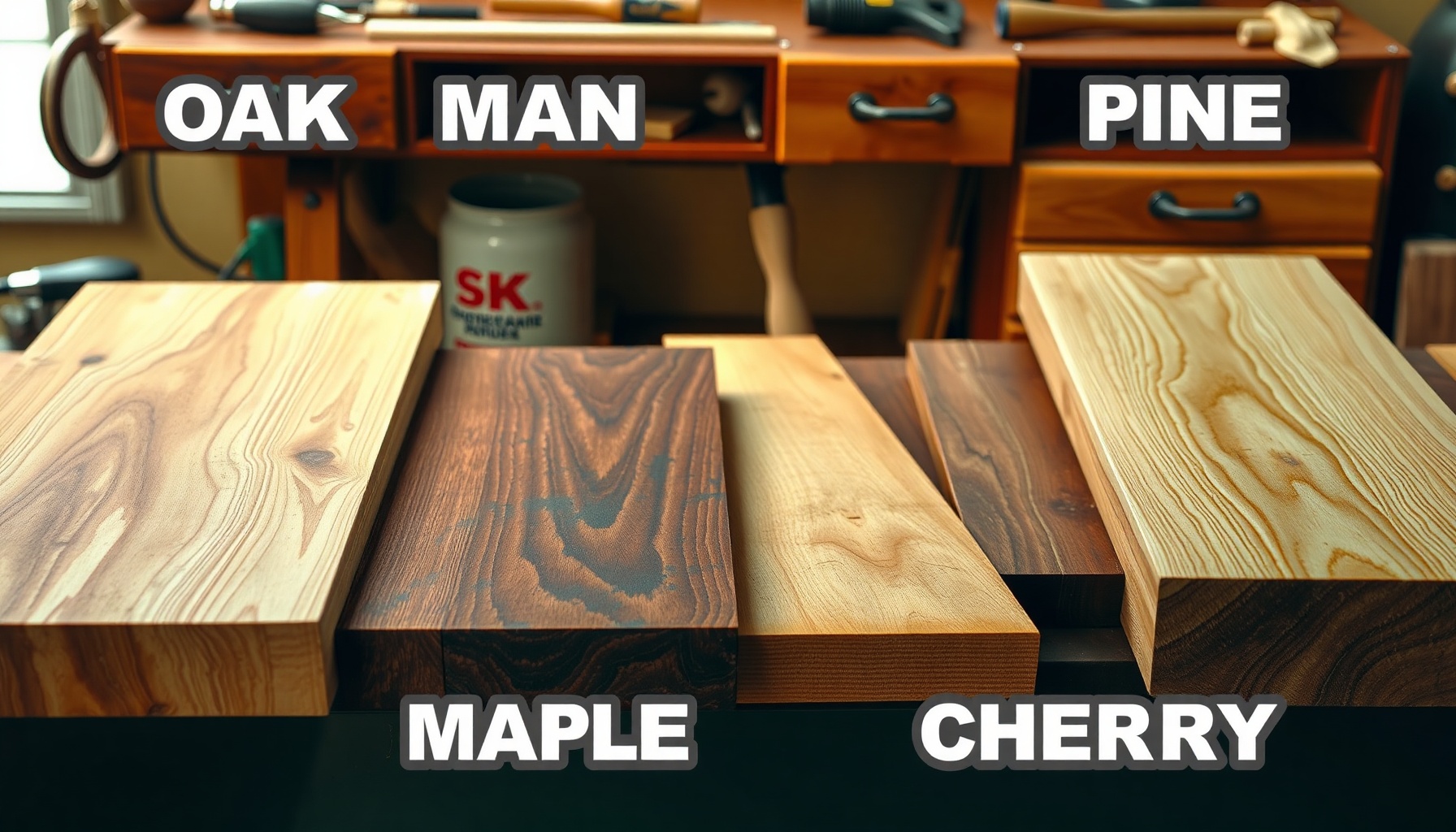
Understanding Grain Patterns in Woods
The importance of grain patterns cannot be overstated when it comes to both aesthetics and functionality in various wood types. Each grain pattern has unique characteristics that significantly impact the staining processes, affecting the overall finish.
For instance, oak’s pronounced grain can absorb stain unevenly, highlighting its diverse textures.
When purchasing wood, assessing grain quality is essential; look for consistent patterns free from knots or defects. This consideration ensures optimal use in furniture design and significantly enhances the wood’s aesthetic appeal.
By recognizing these nuances, you can make informed decisions that elevate your woodworking projects.
Oak Wood Durability and Aesthetics
- Oak wood has a high grain density, contributing to its structural integrity and making it resistant to wear and tear.
- Natural resistance to pests like termites makes oak a more durable choice compared to softer woods such as pine.
- Humidity and temperature control are crucial in maintaining oak’s durability and preventing warping or cracking.
- Oak’s pronounced grain patterns can absorb stain unevenly, enhancing its aesthetic appeal when properly finished.
How Does Cherry Compare to Oak?
When selecting the right hardwood for your next woodworking project, the differences between cherry and oak are significant. Cherry wood, recognized for its rich reddish-brown hue, evolves beautifully over time, enhancing the aesthetic appeal of furniture and cabinetry.
This color evolution is particularly appealing for those looking to create a warm, inviting atmosphere.
On the other side, oak is celebrated for its superior durability and strength, making it a prime choice for high-traffic areas.
Its robust nature stands up well to moisture resistance requirements, which is essential for both flooring and cabinetry.
When choosing between cherry and oak, consider the following:.
- Elegance vs. Robustness: Cherry’s elegance may suit formal spaces, while oak’s strength can serve practical needs.
- Long-term Appeal: Cherry matures beautifully, often growing more attractive with age, while oak maintains its structural integrity.
Ultimately, personal preference and the intended use should guide your decision between these two hardwood choices.
The Aesthetic Appeal of Teak vs Oak
Exploring the visual characteristics of wood types reveals how different choices can fit your project needs. Teak, known for its moisture resistance due to natural oils, is ideal for outdoor furniture and marine applications. Its stunning grain patterns and warm golden-brown color add charm to any space.
Teak not only provides beauty but also excels in durability, perfect for external projects.
Comparatively, oak is renowned for its prominent grain patterns and impressive durability, making it suitable for both cabinetry and flooring. The decision on which wood to use may depend on the specific project requirements.
Suitable Projects for Each Wood Type
- Teak: Ideal for outdoor furniture, boats, and any applications exposed to moisture.
- Oak: Favored for cabinetry, flooring, and furniture due to its strength.
Aligning the wood type with its intended use ensures a perfect blend of functionality and aesthetic appeal for your projects.
Cherry, Oak, and Teak
- Cherry wood’s color deepens and becomes richer over time, enhancing its appeal in furniture.
- Oak’s high durability makes it a preferred choice for flooring and areas with heavy foot traffic.
- Teak contains natural oils that provide excellent moisture resistance, making it suitable for outdoor use.
- Both cherry and oak have unique grain patterns, contributing to their aesthetic value in woodworking projects.
Exploring Cost Effectiveness of Various Woods
Analyzing cost-effectiveness in wood selection is essential for furniture projects. Selecting wood types based on longevity significantly influences overall costs.
For example, hardwoods like oak, though initially more expensive, frequently outlast their softwood counterparts, leading to notable long-term savings.
Quality is paramount; high-grade materials typically command higher prices but can reduce the frequency of replacements.
Sustainably sourced woods may incur a premium but deliver enhanced durability and aesthetic appeal.
To budget effectively, prioritize high-quality options while considering volume discounts from suppliers, particularly for larger orders. Wholesale pricing strategies can create opportunities for substantial savings across extensive projects.
Meticulous planning during woodworking minimizes waste, translating into further cost savings.
Maintenance Tips for Oak Furniture
Caring for oak furniture is essential due to its inherent durability and natural beauty. Without regular maintenance, common issues such as scratching, fading, and cracking may arise, potentially diminishing its lifespan.
Establishing a consistent routine can effectively prolong the life of your oak.
Routine Cleaning
For maintenance, implement a simple cleaning schedule using a soft, damp cloth to avoid damaging the wood’s natural finish.
Protect oak from direct sunlight and moisture to prevent environmental wear.
Periodic professional care, particularly for high-use items, is recommended to keep your furniture looking its best.
Preventive Measures
Consider protective coatings that enhance moisture resistance and utilize proper furniture placement to safeguard against scratches and damage. Regularly assessing and adjusting your cleaning techniques will help maintain the wood’s visual appeal and structural integrity.
| Wood Type | Initial Cost | Longevity | Maintenance Frequency |
|---|---|---|---|
| Hardwoods (e. g. , Oak) | Higher | Long-lasting | Low |
| Softwoods | Lower | Shorter lifespan | High |
| Sustainably Sourced Woods | Premium | Enhanced durability | Moderate |
How to Choose the Right Wood for Cabinetry?
Selecting the ideal wood for cabinetry involves a careful balance of aesthetic appeal and functionality. Hardwood types such as oak or maple are known for their impressive durability and stunning visual characteristics.
To achieve a harmonious look, consider the grain patterns and color variations in different wood species.
For example, w arm walnut offers a rich hue that enhances the elegance of any space, making it suitable for prominent areas.
Evaluating Wood Options
When determining which wood best suits your cabinetry needs, it’s essential to assess the intended use and environment.
For high-traffic areas, opting for a harder wood may provide the necessary durability to withstand wear. Here are some factors to consider:
- Moisture resistance: Some woods, like teak, offer better resistance to humidity, making them ideal for kitchen cabinetry.
- Maintenance: Certain woods require more upkeep; cedar, for instance, has natural oils that minimize damage and insect issues.
- Cost-effectiveness: Assessing the price of different woods, such as poplar versus mahogany, can influence your budget and project scale.
The Aesthetic vs. Functional Balance
Each species comes with its unique characteristics that influence both aesthetics and functionality. For example:.
- Birch: Known for its fine grain and smooth finish, making it suitable for contemporary designs.
- Pine: Offers affordability and a charming rustic appeal, perfect for farmhouse styles.
- Walnut: Showcases rich colors and excellent structural integrity, appealing for classic furniture designs.
Ultimately, your choice should align with environmental factors, such as local humidity and temperature fluctuations, alongside your maintenance needs. This approach will enhance both the longevity and visual impact of your cabinetry.
Choosing Wood for Cabinetry
- Hardwoods like oak and maple are preferred for their durability and aesthetic appeal.
- Teak is renowned for its moisture resistance, making it ideal for humid environments like kitchens.
- Cedar’s natural oils provide resistance against insects and reduce maintenance needs.
- Cost can vary significantly between wood types, influencing project budgets and choices.