
Choosing wood for your home projects involves recognizing the unique qualities that oak and pine offer. Oak wood is known for its durability and strength, making it an optimal choice for high-traffic areas.
In contrast, pine is celebrated for its visual appeal and cost-effectiveness, catering to budget-conscious consumers.
Selecting the appropriate wood type significantly influences not only the aesthetics but also the lifespan of your furnishings.
Let’s delve into the characteristics that differentiate these woods, highlighting their practical applications and maintenance requirements.
Click here to learn more about: www.globalvisioncompany.com
Hardwood Comparison: Oak vs Pine
The differences between oak and pine extend beyond mere appearance; they involve significant hardwood comparison factors such as hardness and resilience. Oak consistently ranks higher on the Janka hardness scale, resulting in superior resistance against scratches and dents.
This elevated durability assessment makes oak a suitable option for furnishings and flooring selection in areas that experience high wear. Pine, while classified as a softwood, is preferred for its aesthetic appeal and adaptability in woodworking applications.
Pine offers remarkable versatility, making it ideal for various projects.
Maintenance needs also differ significantly: oak typically requires occasional refinishing to preserve its finish and aesthetic integrity, while pine demands more frequent treatments to maintain its appearance and protect against potential damage.
The cost analysis of both woods can further influence your choice, as each comes with distinct implications for long-term care.
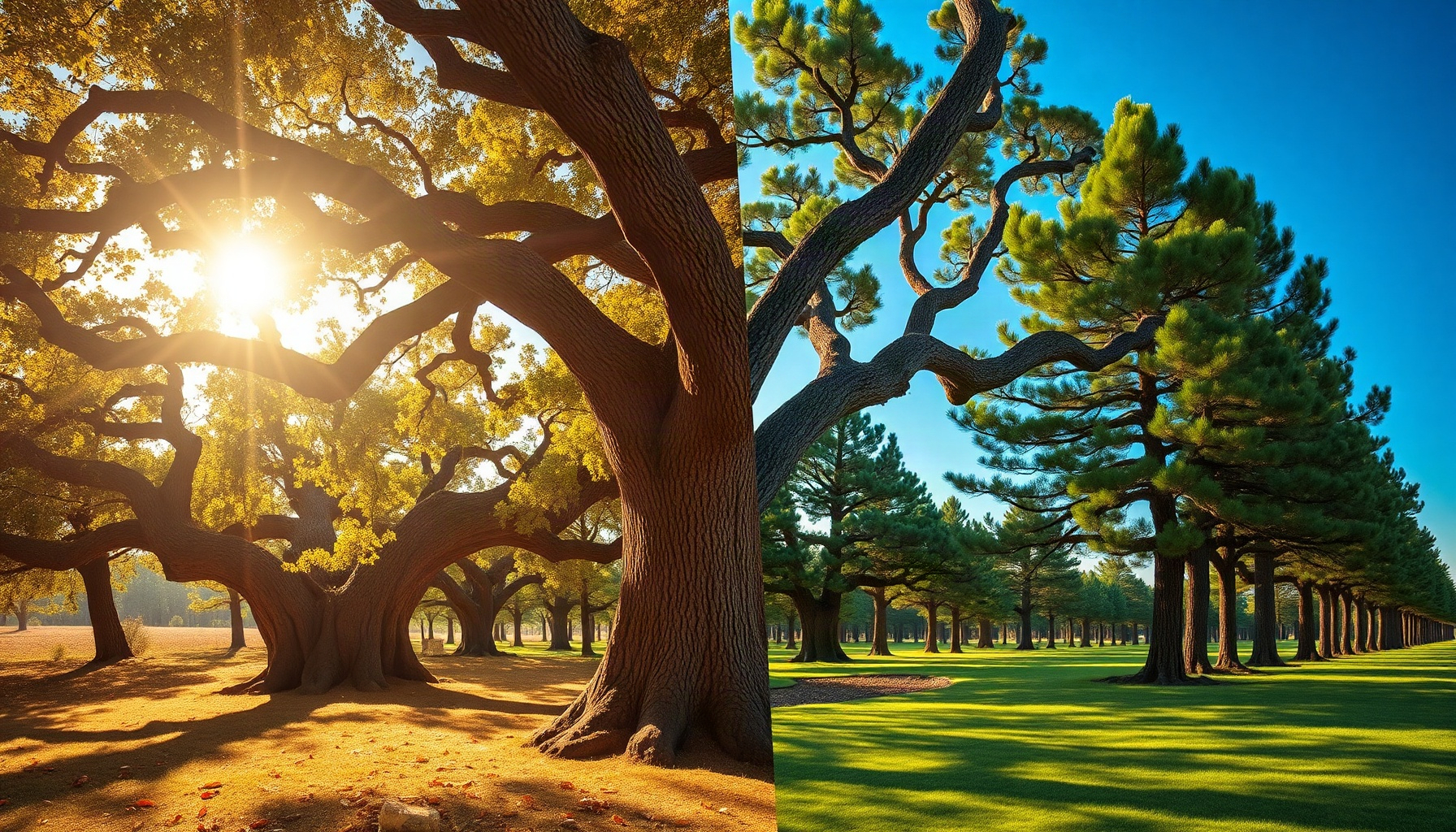
Softwood Characteristics of Pine
Pine wood showcases a variety of characteristics that make it a popular choice for both construction and crafting. Growth conditions, particularly in temperate climates with well-drained soil, play a significant role in determining the quality of pine wood.
These trees grow rapidly, resulting in softer wood that is easier to manipulate, benefiting various woodworking applications.
The softness of pine is particularly advantageous for DIY enthusiasts, given its cost-effectiveness and lower labor requirements for handling.
- Popular for furniture making and cabinetry options.
- While it may lack the durability of hardwoods, its lightweight nature allows for easy handling.
Durability assessments indicate that while pine does not withstand wear as well as hardwoods like oak, its appealing characteristics make it suitable for a wide range of projects.
Growth Conditions and Wood Quality
Softwood characteristics of pine are heavily influenced by its growth conditions. The ideal environment contributes to moisture resistance and overall wood strength, which are essential factors for long-lasting use.
Versatile Applications in Crafting
The soft nature of pine enhances its aesthetic appeal, making it a favorite for various woodworking projects. The wood’s grain patterns and color variations offer visual flexibility that complements diverse design preferences.
Durability Assessment of Oak
Examining oak reveals its exceptional durability and moisture resistance, which positions it as a superior material for numerous applications. Comparing durability with other woods, oak exhibits remarkable hardness, allowing it to resist scratches and dents effectively. This innate strength is enhanced by the wood’s natural oils, which repel moisture and prevent damage, making oak particularly suitable for outdoor use.
Long-lasting Performance in Outdoor Applications
Durability assessments show that oak’s lifespan in outdoor settings greatly surpasses that of pine. With proper treatment, oak can endure for decades, proving it to be a wise investment in furniture lifespan and structural integrity.
Cost-Effectiveness Over Time
In the realm of cost analysis, oak may involve a higher initial investment; however, its longevity leads to lower maintenance costs. This combination of durability and cost savings makes oak an economically sound choice for those considering construction materials.
Investing in oak not only provides quality but also ensures structural stability over the years, surpassing the performance of softer woods.
- With proper care, oak outlasts pine and many other species.
- Ideal for outdoor furniture and structures, oak proves to be a consistent investment.
Pine and Oak
- Pine wood is favored for its softness, making it easier to work with for DIY projects.
- Oak exhibits exceptional durability, allowing it to resist scratches and dents effectively.
- With proper treatment, oak can last for decades in outdoor settings, making it a wise investment.
- While oak has a higher initial cost, its longevity results in lower maintenance expenses over time.
Aesthetic Appeal: Oak or Pine
The choice between oak and pine significantly impacts visual appeal within spaces. Oak showcases a spectrum of color variations, ranging from light tan to deep amber, while pine generally displays a lighter palette infused with yellow undertones.
Natural finishes enhance oak’s inherent tones, contributing to a sense of depth and warmth.
Alternatively, stained finishes provide flexibility, allowing alterations to the initial appearance of both woods.
This variety often influences consumer perceptions of luxury and quality, prompting buyers to consider how these aesthetic attributes align with their individual design preferences.
Visual Preferences and Design Impact
Examining the aesthetic appeal of oak reveals its rich textures and colors, which can elevate a space’s sophistication. Meanwhile, pine offers a more understated charm that suits various styles.
This wood species selection often reflects personal taste, influencing furniture making and cabinetry options based on desired ambiance.
Grain Patterns: How They Differ
Distinct grain patterns play an essential role in distinguishing oak from pine, affecting design choices significantly. Oak features bold, prominent grains with variations that can captivate attention, making it ideal for formal spaces.
Pine, by contrast, presents straighter, less distinct grains that cater to a more casual, rustic aesthetic.
Staining oak can effectively enhance its intricate patterns, while finishing techniques for pine may prove more complex due to its varying density.
These factors encourage woodworking applications to favor one option over the other based on specific project requirements.
Design Styles Favoring Oak or Pine
Incorporating oak into traditional or contemporary designs reinforces structural integrity and elegance. Conversely, using pine in country or farmhouse styles emphasizes warmth and simplicity.
By understanding these grain characteristics, customers can tailor choices to suit their preferences, maximizing the visual appeal of their spaces.
Oak and Pine
- Oak wood typically has a wide range of color variations, from light tan to deep amber, enhancing its aesthetic appeal.
- Pine wood features a lighter palette with yellow undertones, offering a more casual and rustic look.
- The grain pattern of oak is bold and prominent, making it suitable for formal designs, while pine has straighter, less distinct grains for a relaxed ambiance.
- Different finishing techniques can enhance the visual characteristics of both woods, influencing their application in various design styles.
Moisture Resistance: Which Wood Performs Better
Evaluating moisture resistance in wood is imperative for selecting materials intended for areas exposed to high humidity, such as kitchens and bathrooms. Oak distinguishes itself through its dense grain structure, inherently providing superior moisture resistance.
The natural oils present in oak effectively repel water, ensuring extended longevity in humid conditions.
On the other hand, Pine, despite being more vulnerable to moisture, can be treated to significantly enhance its water resistance.
Regular maintenance, including sealing and employing water-resistant finishes, creates an opportunity to improve pine’s performance over time. Ultimately, assessing moisture resistance relates strongly to ensuring the sustainable use of these woods, particularly across diverse climate conditions.
Cost Analysis: Oak vs Pine Prices
Evaluating the costs of oak and pine reveals significant price differences influenced by local availability and market demand.
Oak, categorized as a hardwood, generally commands a higher price due to its durability and longevity, establishing it as a wise long-term investment for furniture making and cabinetry options. Conversely, Pine often presents more budget-friendly characteristics, appealing to consumers who prioritize initial cost savings.
Understanding these price comparisons allows buyers to evaluate short-term affordability against anticipated long-term maintenance needs.
While pine may require additional upkeep, the durability rating of oak results in lower overall costs over time.
This makes it essential to assess both upfront expenses and future maintenance when selecting between these wood species.
- Oak’s dense grain structure provides superior moisture resistance, making it ideal for high-humidity areas.
- The natural oils in oak help repel water, contributing to its longevity in humid conditions.
- Pine can be treated with sealants and water-resistant finishes to improve its moisture resistance.
- While oak is more expensive initially, its durability can lead to lower overall costs compared to pine over time.
Sustainability Factors in Wood Selection
Choosing wood for projects involves understanding various sustainability factors that influence responsible consumption. Sourcing practices for oak and pine differ significantly, each impacting the environmental footprint of these materials.
Oak is often harvested from aged forests, which may provide sturdy timber but can lead to biodiversity loss if not managed properly.
In contrast, pine is frequently sourced from managed plantations designed to mitigate ecological damage; however, this can promote monoculture, adversely affecting local species.
Certifications such as FSC and PEFC serve as essential indicators of responsible sourcing, ensuring consumers support practices that prioritize ecological sustainability.
Adopting these informed choices not only enhances the overall value of wood but also links back to earlier discussions on durability assessments. Considering both environmental impact and long-term durability in wood selection solidifies its importance in sustainable practices.
Evaluating Environmental Impact
Environmental impact assessments for wood products encompass various factors, including sourcing methods and ecological sustainability.
Oak, with its dense characteristics, boasts a higher durability rating but may contribute to higher levels of deforestation if harvested irresponsibly. Meanwhile, pine, known for its lower moisture resistance, is often favored for construction materials due to its cost-effective nature and quick sourcing capabilities.
Emphasizing sustainable choices in sourcing methods can lead to better preservation of species diversity and support healthier ecosystems.
Understanding the significance of certifications such as FSC enhances consumer awareness about the impact of their choices.
These labels can mitigate negative effects on the environment by guiding consumers toward options that are not only durable but also ecologically friendly.
By aligning personal preferences with sustainable practices, a positive impact on the market demand for certified wood products is achievable.
Wood Selection Sustainability
- Oak trees take decades to mature, making responsible harvesting crucial to prevent biodiversity loss.
- Pine plantations can lead to monoculture, which negatively impacts local ecosystems and species diversity.
- FSC and PEFC certifications ensure that wood products are sourced from sustainable practices, aiding in environmental conservation.
- Choosing durable wood like oak can reduce the frequency of replacements, further minimizing environmental impact over time.