
Choosing the right wood for furniture or construction involves evaluating durability features. Oak is celebrated for its remarkable strength and typically outlasts pine, a softwood.
The differences in longevity and maintenance requirements significantly impact how each type of wood performs over years.
While both options have distinctive characteristics, oak generally offers superior wear resistance and excels in managing moisture content, making it the preferred choice for areas with high foot traffic.
This durability comparison ultimately guides buyers in selecting the most suitable timber for their needs.
Click here to learn more about: www.globalvisioncompany.com
Understanding Hardwood Durability
Effective maintenance strategies substantially influence the longevity of hardwoods, such as oak and maple. Regular cleaning and refinishing practices can significantly reduce wear and tear, enhancing structural integrity.
Conversely, unprotected wood is vulnerable to rapid damage from humidity or temperature changes. Popular hardwoods demonstrate varying wear rates, showcasing their resilience.
For instance, oak stands out due to its impressive durability, whereas softer species like pine will display quicker wear.
Maintenance Practices that Enhance Durability
Implementing sound maintenance methods fosters longevity in wood.
Regular cleaning and attention to moisture content keep surfaces safe.
Applying protective finishes, including polyurethane or natural oils, plays a critical role. These finishes provide essential barriers against scratches, stains, and moisture, ensuring wood maintains its aesthetic appeal over time.
Protective finishes greatly enhance the wood’s ability to withstand damage from daily use.
Protective Finishes for Your Wood
Choosing the right finish can substantially improve wood’s wear resistance. Finishing techniques like staining or sealing enhance the surface layer and promote resilience.
These not only offer a protective layer but also add to the aesthetics of the wood.
Protective coatings are an indispensable aspect of woodworking, ensuring the timber maintains its integrity and looks attractive.
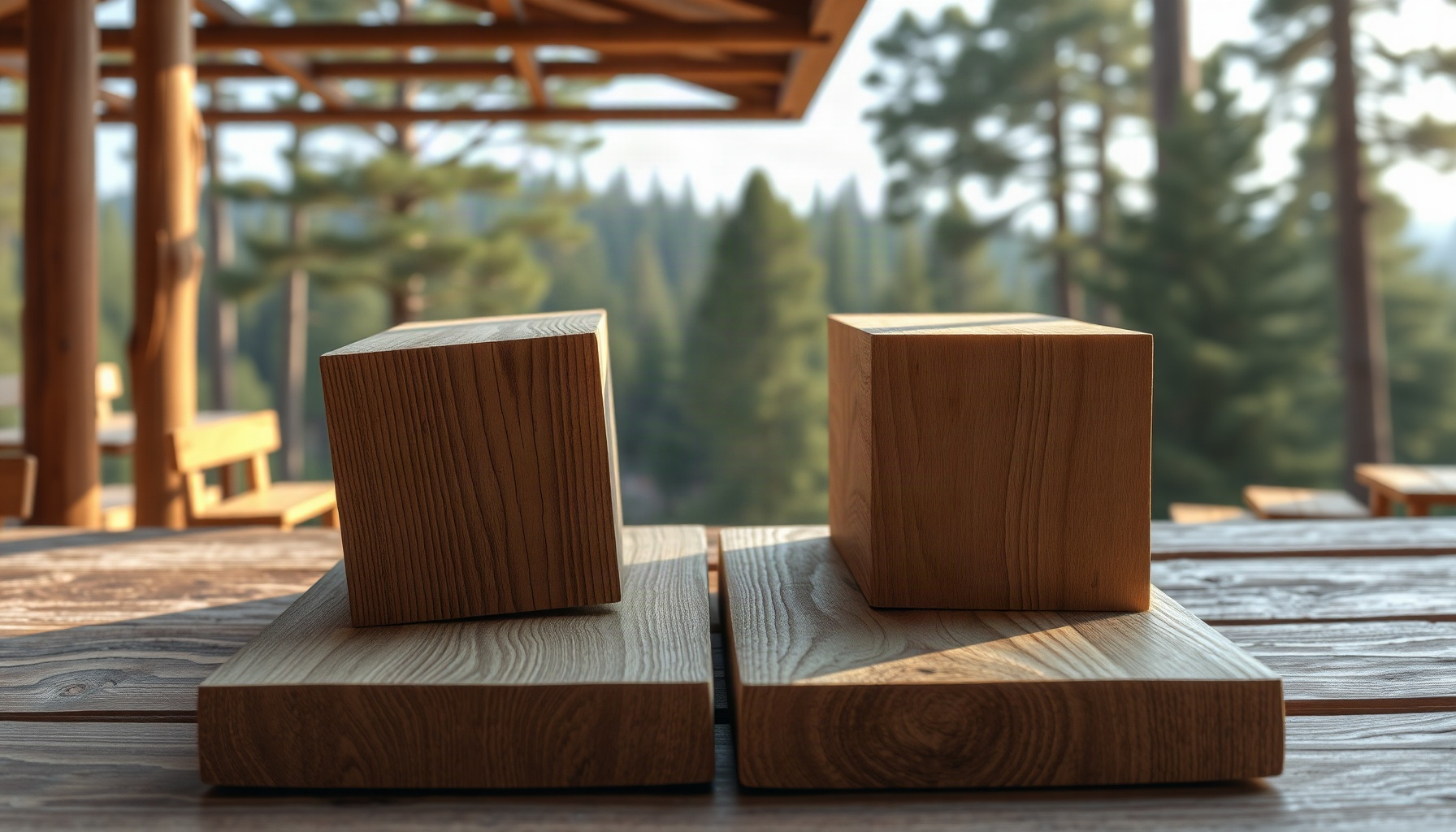
Comparative Analysis of Wood Options
While discussing oak and pine, it is essential to highlight their natural variance.
Oak’s density contributes to its impressive structural integrity and resistance to decay, making it a robust option for various applications, including flooring and cabinetry. Pine, however, can be more cost-effective and offers versatility in crafting, but it requires greater attention to maintenance to ensure its longevity.
Choosing between oak and pine ultimately hinges on understanding specific needs, such as desired applications and maintenance capabilities.
This knowledge will guide the selection process, ensuring a lasting investment in quality timber.
Softwood Characteristics Compared
The distinct features of softwoods play a significant role in project planning. Commonly utilized in construction and aesthetic applications, softwoods like Pine and Spruce are lightweight, making them ideal for framing and roofing.
Their low density offers cost-effectiveness without compromising structural integrity.
Conversely, Cedar excels in outdoor settings due to its natural resistance to decay and insects, which enhances its longevity.
For aesthetic purposes, softwoods such as Cedar and Fir are favored for their beautiful grain patterns and color variations, contributing to visual appeal in furniture and design elements.
Choosing the Right Softwood
When selecting softwoods, consider the following factors:.
- Durability: Assess the environmental conditions where the wood will be used.
- Aesthetics: Choose based on the desired finish and color variation.
- Weight: Lightweight options may be preferred for specific applications.
- Moisture Content: This affects how the wood behaves over time, especially regarding expansion and contraction.
Focusing on these aspects ensures that the selected softwood meets both functional and visual project requirements.
Timber Strength in Construction
The importance of load-bearing capabilities in timber structures cannot be overstated. Quality timber must possess sufficient tensile and compressive strength to support various loads effectively. Compressive strength is particularly important for load-bearing walls, which should utilize high-strength materials to prevent failure. Implementing effective design considerations can significantly enhance overall structural integrity.
Enhancing Timber Integrity
To improve the strength of timber structures, consider the following suggestions:.
- Bracing: Incorporate elements that stabilize the structure against lateral forces.
- Joinery Techniques: Use strong joinery methods to connect timber components securely.
- Regular Inspections: Schedule routine maintenance to ensure the longevity and resilience of timber.
Selecting high-quality timber is integral in construction projects, where load-bearing capabilities and durability are paramount, thus contributing to safer and more durable buildings.
| Softwood Type | Characteristics | Common Uses |
|---|---|---|
| Pine | Lightweight, cost-effective | Framing, roofing |
| Cedar | Natural decay and insect resistance | Outdoor applications |
| Fir | Beautiful grain patterns | Furniture, design elements |
What Impacts Wood Longevity
The longevity of wood plays a significant role in its effectiveness for various applications, particularly in construction and furniture. Environmental factors, including moisture levels, temperature fluctuations, and sunlight exposure, are key influences on wood durability.
High humidity can lead to rot, while dry conditions may cause cracking in timber.
Extreme temperatures contribute to accelerated degradation.
Using preservatives, such as staining and sealing, effectively safeguards wood against moisture and UV damage over the years.
Homeowners should apply moisture barriers for outdoor wood applications and regularly reapply treatments in humid climates. In colder areas, selecting woods rich in natural oils, like cedar, can significantly enhance longevity.
Evaluating Wear Resistance Factors
Assessing wear resistance in wood starts with the understanding of grain patterns and hardness ratings.
Hardwoods, such as oak, achieve higher Janka ratings, indicating stronger durability compared to softwoods. Such characteristics render oak less vulnerable to dents and scratches over time.
Different finishes, including polyurethane, not only enhance aesthetics but also create a protective layer that boosts durability.
To evaluate flooring options, conducting scratch tests can yield valuable insight into durability.
Reviewing manufacturer specifications for hardness ratings aids in informed decision-making.
Regularly consulting user reviews facilitates the assessment of the real-world performance of different wood types.
Wood Longevity and Wear Resistance
- Wood treated with preservatives can last significantly longer, reducing the risk of rot and UV damage.
- Hardwoods like oak have Janka hardness ratings that indicate they are more resistant to wear compared to softwoods.
- Regular maintenance, such as reapplying moisture barriers and finishes, can greatly extend the life of wood products.
- Conducting scratch tests on wood flooring can provide practical insights into its durability and long-term performance.
Moisture Content and Wood Stability
The stability of wood greatly relies on its moisture content, which plays a pivotal role in achieving durable flooring. Fluctuations in moisture can result in significant expansion and contraction, directly impacting wood’s longevity and performance.
Therefore, monitoring moisture levels effectively is vital for maintaining the integrity of your flooring.
To measure moisture content, employing moisture meters proves essential as they provide accurate readings, while relative humidity sensors help monitor the surrounding environment.
Consider these methods:.
- Moisture Meters: Vital for determining wood’s moisture proportion before installation.
- Relative Humidity Sensors: Useful for tracking environmental conditions during acclimatization.
Proper acclimatization enhances dimensional stability; allow wood to rest in its intended space for several days, controlling temperature and humidity. Implementing these practices can prevent warping and cracking, thus securing the wood’s structural integrity and durability.
Aesthetics vs Durability in Flooring
Deciding on flooring materials requires connecting design choices to anticipated durability. Popular materials, such as hardwood and laminate, differ notably in both maintenance requirements and overall lifespan.
Comparative Analysis of Flooring Materials
Hardwood offers timeless beauty, resilience, and natural variation. It often requires more ongoing care. In contrast, laminate provides an economical option with low-maintenance wear resistance. To balance visual appeal with practical longevity, consider these factors:
- Traffic Levels: Assess the expected foot traffic to determine suitable durability.
- Finishes: Choose finishes that enhance the wood’s aesthetics while simplifying care.
“Selecting the right floor involves not just visual appeal but practical concerns about maintenance and longevity. ”
This dual approach supports a visually appealing while also practical choice for any space. By evaluating aesthetic goals alongside expected longevity, homeowners can create environments that truly reflect their style and withstand the test of time.
Moisture Content and Flooring Durability
- Wood can expand or contract by up to 1% for every 4% change in moisture content.
- Proper acclimatization can reduce the risk of warping by 50% when installing hardwood flooring.
- Hardwood floors can last over 100 years with proper maintenance, while laminate typically lasts 15-25 years.
- Moisture meters can detect moisture levels as low as 5%, ensuring accurate assessments before installation.
Cost-Effectiveness of Oak vs Pine
Evaluating cost-effectiveness between oak and pine involves analyzing long-term investment implications for each wood type. Initially, oak’s pricing reflects its designation as a hardwood, thus presenting a higher upfront cost.
In contrast, pine boasts affordability, making it appealing for budget-conscious projects.
Oak’s longevity often translates to greater economic value over time, with lower maintenance requirements contributing to its cost-effectiveness.
Maintenance Costs Over Time
When comparing maintenance costs associated with pine, recognized as a softwood, its propensity for scratches and dents typically necessitates more frequent repairs or replacements.
As a result, these ongoing expenses can accumulate swiftly, leading to increased overall costs. In high-traffic environments, oak proves to be a prudent investment due to its superior durability, wear resistance, and structural integrity.
Choosing Based on Specific Needs
For individuals prioritizing aesthetics alongside budget constraints, pine can adequately fulfill its intended purpose.
Opting for oak offers benefits such as resilience to wear and rot, enhancing its appeal for long-term use. Ultimately, selecting between these wood types hinges on specific requirements and expected usage scenarios.
Cost-Effectiveness of Oak vs Pine
- Oak generally has a higher upfront cost due to its classification as a hardwood.
- Pine, being a softwood, is more affordable but may incur higher maintenance costs over time.
- Oak’s durability and wear resistance make it a better long-term investment in high-traffic areas.
- Choosing oak can lead to lower maintenance requirements and overall economic value compared to pine.