
Selecting the right healthcare furnishings can significantly impact patient outcomes in modern healthcare settings. Essential furniture for medical facilities enhances comfort and improves staff efficiency while maintaining functionality.
Items such as examination tables, treatment chairs, and patient privacy screens contribute to a supportive and healing environment.
Suitable waiting room furniture alleviates patient anxiety, while medical cabinets ensure organization and safety.
Investing in quality healthcare furniture directly contributes to a more positive patient experience, benefiting both patients and medical professionals alike.
Click here to learn more about: www.globalvisioncompany.com
Importance of Hospital Beds in Care
Hospital beds serve as the foundation for fostering patient comfort and recovery. These specialized beds feature numerous comfort support attributes that enhance safety and facilitate infection control.
Essential aspects include adjustable height settings, which provide caregivers easy access, as well as backrest mechanisms that allow patients to achieve their optimal healing position. Patient safety remains a priority; beds come equipped with side rails to prevent falls and locking mechanisms that maintain stability during procedures.
Innovative designs with antimicrobial surfaces and easy-to-clean materials are critical for effective infection control, ensuring a hygienic environment for recovery.
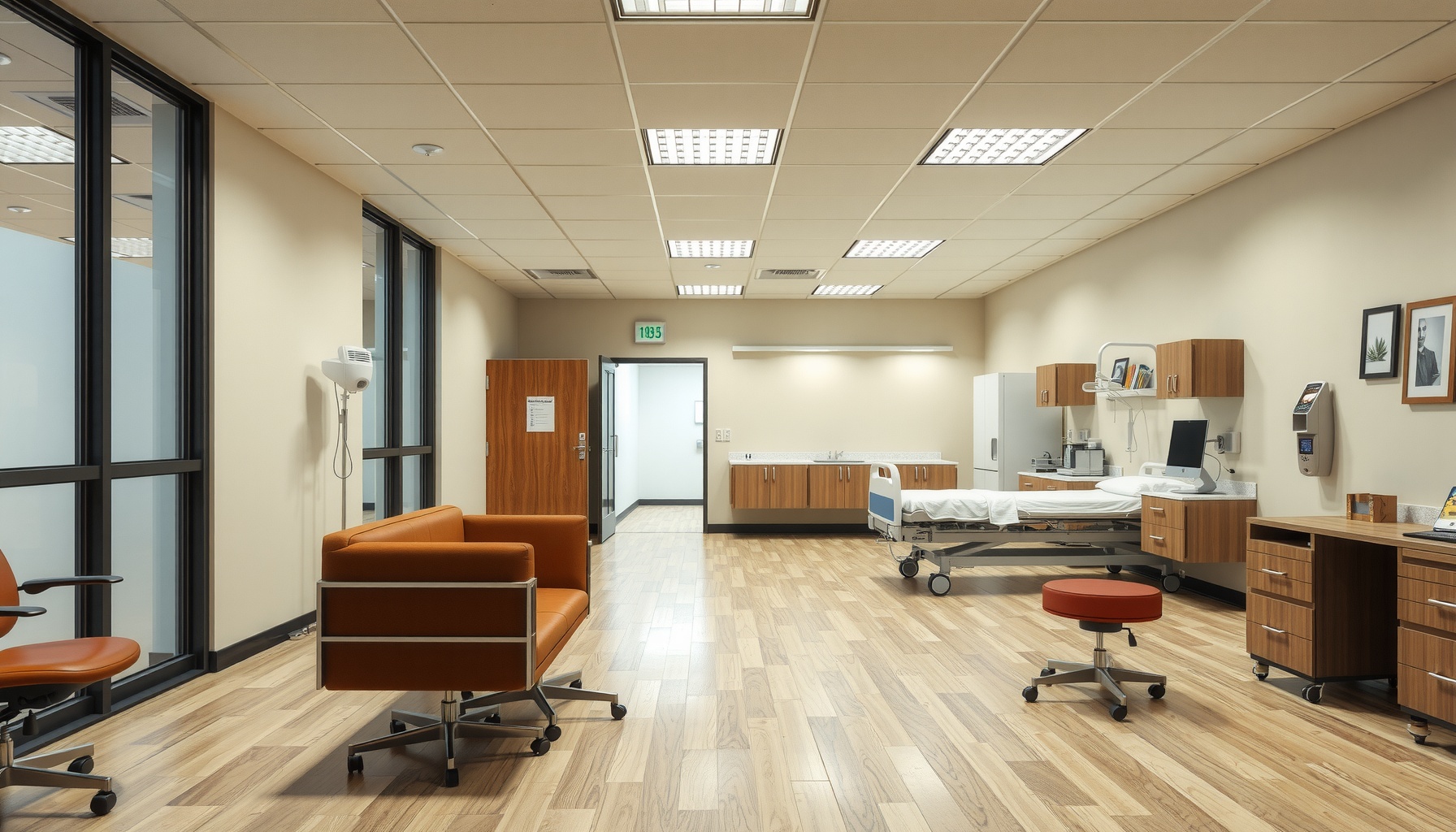
Key Features of Examination Tables
Examination tables are essential components in healthcare settings, significantly enhancing patient care outcomes. The key features of examination tables include:.
- Height Adjustability: Height adjustability allows for ergonomic examination tables to accommodate various patient heights, enabling healthcare providers to deliver optimal care efficiently.
- Patient Comfort: Quality padding on cushioned surfaces ensures that patients remain comfortable during examinations, effectively reducing anxiety and promoting a positive experience.
Additional accessories, such as overhead lighting and adjustable armrests, enhance the overall functionality of examination tables. By integrating these crucial features, healthcare facilities can improve usability in examination areas, thus benefiting patient satisfaction significantly.
Selecting the Right Seating Solutions
Choosing effective seating solutions is essential for creating functional healthcare environments. Prioritizing ergonomics ensures that seating promotes healthy posture, making it beneficial for both staff and patients. Space efficiency is another important consideration; selecting seating solutions that maximize available space fosters a more functional layout.
Understanding Patient Needs
When selecting seating options, it is necessary to consider patient needs to guarantee comfort and accessibility for all individuals. Quality seating solutions should combine durability with aesthetic appeal, enhancing the welcoming atmosphere in waiting areas and treatment rooms alike.
Creating Positive Interactions
Ultimately, the right choices in seating solutions contribute to fostering positive interactions among patients, staff, and visitors. Healthcare environments benefit from comfortable and functional seating as it enhances the overall healthcare experience.
Examination Tables and Seating Solutions
- Studies show that adjustable examination tables can reduce strain on healthcare providers, leading to fewer work-related injuries.
- Comfortable seating can decrease patient anxiety levels by up to 30%, improving overall satisfaction in healthcare settings.
- Ergonomic seating solutions can enhance productivity among staff, allowing for better patient care delivery.
- Healthcare facilities with well-designed waiting areas report a 20% increase in patient retention rates.
Designing Effective Waiting Room Furniture
Creating an inviting atmosphere in healthcare settings begins with the selection of appropriate wedding room furniture. Aesthetic choices should feature striking, soothing colors that promote comfort and calm.
Functionality remains a top priority; flexible seating solutions accommodate diverse group sizes and individual needs effectively.
Cleanable surfaces are essential for high-traffic areas to maintain hygiene standards.
Design elements that foster comfort include:.
- Ergonomic seating options that support proper posture
- Designated children’s areas with engaging seating
- Integrative technology furniture for telehealth stations
Such thoughtful considerations not only enhance patient satisfaction but also contribute to the overall efficiency perceived within the healthcare facility. By focusing on elements like wheelchair-accessible furniture and sensory-friendly designs, healthcare providers can significantly reduce anxiety for patients awaiting care.
Essential Medical Cabinets for Storage
Organizing a healthcare space effectively hinges on the quality of medical cabinets utilized. Accessibility to supplies ensures quick visibility and retrieval, leading to smooth operations throughout the facility. Emphasizing durable materials, such as stainless steel and antimicrobial surfaces, enhances the longevity of these essential storage solutions.
Key features of effective cabinetry systems include:.
- Adjustable shelving to accommodate various items
- Secure locking mechanisms for sensitive materials
- Modular designs that allow for flexible rearrangement
Streamlining storage options minimizes clutter and improves workflow, allowing healthcare professionals to focus primarily on patient care. Investing in thoughtful storage solutions fosters organization and efficiency across healthcare practices, ultimately supporting the delivery of high-quality care.
Waiting Room Furniture and Medical Cabinets
- Studies show that comfortable waiting room environments can reduce patient anxiety by up to 30%.
- Ergonomic seating can improve patient posture, leading to better overall health outcomes during wait times.
- Efficient storage systems can decrease the time healthcare professionals spend searching for supplies by approximately 25%.
- Utilizing antimicrobial surfaces in medical cabinets can significantly lower the risk of infection transmission in healthcare settings.
Benefits of Treatment Chairs
Treatment chairs are specifically designed for healthcare environments, providing a range of advantages that improve patient care. Enhanced comfort during procedures leads to a more pleasant experience, which is critical for patient satisfaction.
Adjustable features included in these chairs not only accommodate diverse patient needs but also promote better overall accessibility.
For example, reclining options and height adjustments ensure that patients maintain an ergonomic posture throughout their visits.
Healthcare providers benefit from the ability to reposition the chairs easily, catering to individual patient preferences and fostering a comforting atmosphere. Overall, treatment chairs are instrumental in enhancing mobility and comfort, ultimately optimizing the healthcare journey for both patients and professionals.
Optimizing Mobility Aids for Patients
The use of mobility aids plays a significant role in improving patient independence within healthcare facilities.
Different types of mobility aids, such as wheelchairs, walkers, and canes, serve various needs and promote enhanced safety and mobility for patients. Selecting the proper aids allows facilities to maximize the benefits offered, significantly reducing fall risks and aiding in recovery.
Facilities should assess individual patient requirements and provide comprehensive staff training on proper usage to optimize these aids’ effectiveness.
- Assess needs: Regular evaluations help ensure that the right mobility aids are provided.
- Provide training: Staff education on the correct use of mobility aids enhances patient safety.
- Gather feedback: Collecting perspectives from both patients and staff can refine the selection process.
“Effective use of mobility aids can significantly enhance patient comfort and independence. ”.
By integrating these practices, healthcare facilities can improve the overall experience for patients utilizing mobility aids, supporting their journey toward recovery and independence.
Treatment Chairs and Mobility Aids
- Studies show that comfortable treatment chairs can reduce patient anxiety during procedures.
- Adjustable treatment chairs have been linked to improved patient outcomes by allowing for better positioning.
- Properly selected mobility aids can decrease fall rates by up to 50% in healthcare settings.
- Training staff on mobility aids usage can lead to a 30% increase in patient satisfaction scores.
Volume Discounts in Wholesale
Volume discounts serve as a pivotal pricing strategy for wholesalers who aim to boost their sales through effective bulk purchasing incentives. These discounts encourage larger orders, benefiting both the buyer and the seller by creating economies of scale that optimize their operations.
Benefits of Volume Discounts
Implementing tiered pricing models allows wholesalers to attract diverse customer segments while ensuring significant cost-per-unit savings.
Discounts can vary based on quantity thresholds, often offering reductions of 10% or 20% after specific unit purchases.
This approach plays a crucial role in maintaining competitive pricing in the marketplace, especially for healthcare furnishings and office furniture.
“By offering volume discounts, wholesalers not only drive sales but also foster customer loyalty, creating long-lasting relationships with buyers. ”
Strengthening Supplier Agreements
Clear communication with suppliers regarding discount terms is essential.
Such collaboration ensures that both parties can optimize their inventory management strategies while driving profitability. Establishing effective supplier agreements can be enhanced through a strategic discount structure, ultimately leading to improved cash flow management for business-to-business (B2B) operations.
Encouraging Customer Loyalty
Volume discounts significantly influence customer retention strategies.
Buyers are more likely to return if they perceive value in purchase agreements, consistently seeking cost savings through bulk orders. This commitment to savings can make wholesalers a preferred supplier for various product categories, including mobility aids, reception desks, and waiting room furniture.
“A strategic approach to volume discounts not only promotes repeat business but also contributes positively to the overall wholesale ecosystem. ”
Volume discounts represent a fundamental aspect of effective wholesale practices.
Regularly reviewing discount policies ensures that wholesalers remain competitive while aligning their strategies with evolving market needs and customer expectations.
Volume Discounts
- Wholesalers can increase order sizes by offering discounts of 10% to 20% based on quantity thresholds.
- Effective tiered pricing models can attract diverse customer segments and enhance cost-per-unit savings.
- Volume discounts can lead to improved customer retention, as buyers seek value in purchase agreements.
- Strong supplier agreements can be established through strategic discount structures, optimizing inventory management and cash flow.