
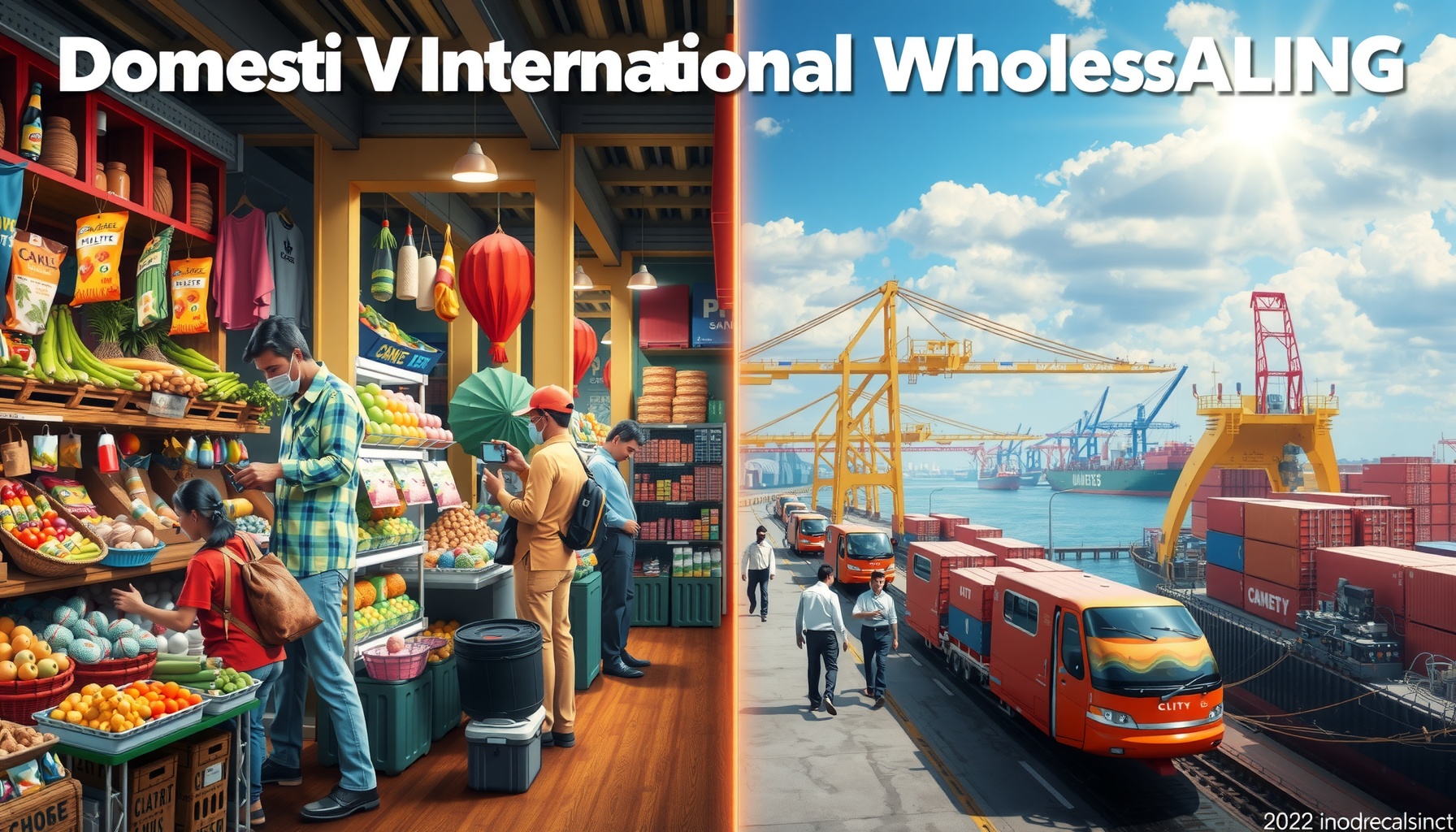
Domestic Vs.
International Wholesaling: Which Is Better?
Exploring the differences between domestic wholesaling and international wholesaling is critical for entrepreneurs seeking profitable avenues.
Each approach offers distinct advantages that can shape operational efficiency and market presence.
Domestic wholesaling typically allows for faster shipping and reduced costs, while international wholesaling can introduce products that are not readily available locally. This analysis can substantially influence your business strategy and potential market reach.
Click here to learn more about: www.globalvisioncompany.com
Market Considerations in Wholesaling
Various factors play a vital role in determining the effectiveness of domestic and international wholesaling strategies.
Wholesale markets are shaped by multiple elements, including:
- Local suppliers: Engaging with local suppliers can streamline supply chain management and minimize turnaround times.
- Global sourcing: Leveraging global sourcing enables access to diverse products and competitive pricing structures.
- Logistics strategies: Different logistics strategies may either simplify operations or complicate them, depending on your unique requirements.
- Import regulations: Navigating import regulations and export compliance is essential for maintaining legal standards.
Evaluating wholesale dynamics helps businesses adapt to consumer preferences and changing market trends.
Incorporating these elements into your wholesale approach can enhance inventory control and ensure better alignment with consumer preferences.
Benefits of Domestic Wholesaling
Domestic wholesaling presents particular benefits that can optimize business operations:
- Faster shipping times improve customer satisfaction and reduce shipping costs.
- Lower tariffs and customs duties lead to more competitive pricing.
- Building relationships with local suppliers can foster trust and reliability.
Advantages of International Wholesaling
Conversely, international wholesaling offers unique opportunities:
- Access to diverse products that appeal to a broader customer base.
- Potential for significant cost-per-unit savings due to bulk purchases.
- Opportunities to enter new markets, enhancing your business’s competitive advantage.
Understanding Wholesale Market Dynamics
Exploring the interaction between local suppliers and global sourcing can provide valuable insights. The dynamics of the wholesale landscape encompass:
- Distribution channels: Effective distribution channels are crucial for reaching target customers.
- Tariffs: Awareness of applicable tariffs can inform pricing strategies and market entry decisions.
- Logistics optimization: Streamlining logistics can enhance operational efficiency and reduce costs.
Evaluating market dynamics allows wholesalers to stay ahead of trends and optimize their strategies.
Businesses must remain attuned to these market dynamics to adapt and thrive in a competitive environment. Wholesale distribution decisions should be informed by ongoing market research and a clear understanding of customer demographics.
Ultimately, selecting between domestic and international wholesaling requires careful consideration of various factors, including product quality, pricing structures, and the ability to forge strong business relationships. Embracing the right wholesale strategy can pave the way for sustained growth and profitability.
Benefits of Cross-Border Trade
Engaging in cross-border trade opens up numerous pathways for businesses, enhancing their opportunities significantly. By utilizing global sourcing, organizations can explore new markets, which in turn boosts revenue potential and supports expansion efforts.
Cost efficiency also plays a pivotal role, as businesses frequently benefit from bulk purchasing strategies, leading to reduced overall expenses.
Strengthened Supplier Relationships
Stronger supplier relationships are another advantage of cross-border trade.
By fostering reliable connections, companies can enhance negotiation outcomes, ultimately improving their distribution channels and operational dynamics.
These relationships enable businesses to secure better pricing structures, thus allowing them to compete effectively in their markets.
Diverse Product Offerings
Another key benefit is the enhanced product diversity that cross-border trade provides. Businesses can adapt their offerings according to various consumer preferences and cultural differences, enriching their product portfolio.
This flexibility not only improves product quality but also allows businesses to align better with market trends and consumer demands.
Effective cross-border trade strategies can provide businesses with a significant competitive advantage.
Navigating Freight Forwarding Challenges
Addressing the complexities associated with freight forwarding requires a thorough analysis of logistics strategies. Supply chain management plays a central role, as businesses navigate import regulations and compliance standards to prevent costly shipping delays.
Streamlined logistics management optimizes transportation methods, balancing speed with cost efficiency to enhance operational capabilities.
Risk Management in Freight Forwarding
Identifying and mitigating risks related to international shipping is essential for effective risk management.
Geopolitical issues and fluctuating tariffs can impact logistics, requiring proactive measures to safeguard business interests.
Companies should leverage technology to enhance shipment tracking, allowing real-time monitoring and informed decision-making.
Optimizing Logistics Strategies
Successful businesses employ data analytics to enhance their logistics strategies, ultimately improving operational efficiency. By analyzing shipping costs, lead times, and compliance standards, organizations can refine their logistics approaches and ensure timely delivery of products.
Effective management of supplier contracts and buyer networks also contributes to a seamless supply chain.
Integrating technology into logistics management leads to improved efficiency and better customer engagement.
| Benefits of Cross-Border Trade | Logistics Challenges |
|---|---|
| Increased revenue potential from new markets | Complexities in freight forwarding logistics |
| Stronger supplier relationships improving pricing | Need for compliance with import regulations |
| Diverse product offerings aligning with consumer demands | Risks from geopolitical issues and fluctuating tariffs |
The Role of Tariffs in Wholesaling
Tariffs significantly influence the dynamics of wholesale markets by affecting pricing structures and market accessibility. Customs duties play a pivotal role for wholesalers engaged in crossborder trade, as these duties can inflate costs.
Companies must accurately calculate these tariffs to maintain competitive pricing strategies, particularly when sourcing internationally.
Trade agreements often alleviate tariff burdens, enabling smoother transactions while enhancing profit margins.
Evaluating such agreements is essential for wholesalers focused on optimizing their operations and establishing a strong foothold in global markets.
The Impact of Tariffs
Tariffs can create significant changes in import regulations, leading to shifts in global sourcing strategies. Assessing export compliance ensures businesses are prepared to navigate customs processes effectively, which can mitigate delays in the supply chain.
Such considerations are vital for maintaining logistics strategies that support efficient distribution.
Effective Distribution Channels Explained
Choosing the right distribution channels is critical for wholesalers who aim to penetrate markets effectively. Identifying appropriate channels impacts logistics strategies, influencing how products reach retailers or end consumers.
Evaluating market entry strategies can yield a significant competitive advantage, ensuring efficient delivery and enhanced customer satisfaction.
Channel Selection Criteria
- Local suppliers can streamline logistics and reduce shipping costs.
- Global sourcing gives access to a broader range of products, potentially lowering pricing structures.
- Ecommerce platforms provide new avenues for sales, appealing to diverse customer bases.
- Understanding cultural differences can enhance customer engagement and foster loyalty.
Wholesalers should also consider customer demographics and consumer preferences when selecting channels. A well-structured distribution approach tailors to various requirements, ultimately enhancing operational efficiency and positioning businesses favorably in competitive environments.
Tariffs and Distribution Channels
- Tariffs can increase the cost of imported goods by up to 25%, impacting wholesale pricing strategies.
- Trade agreements can reduce or eliminate tariffs on certain products, potentially increasing profit margins by 10-15%.
- Approximately 70% of wholesalers report that effective distribution channels significantly enhance customer satisfaction.
- Research shows that local suppliers can lower shipping costs by 20-30%, improving overall logistics efficiency.
Pricing Structures in Domestic vs. International
Analyzing pricing structures provides valuable insights for effective market positioning.
In domestic wholesale markets, pricing typically reflects local economic factors and consumer demand.
This understanding of regional pricing nuances is essential for businesses to establish a competitive advantage.
Conversely, international pricing is shaped by a multitude of complex factors, such as currency fluctuations and tariffs. These variables serve as key components in the pricing equation and significantly affect profit margins.
Businesses venturing into crossborder trade must evaluate global sourcing strategies to optimize their pricing models effectively.
This strategic clarity is vital for navigating the complexities of international commerce while ensuring compliance with relevant regulations.
By understanding market dynamics, companies can better position their offerings in both domestic and international marketplaces.
Building Strong Buyer Networks
Developing strong buyer networks is fundamental for achieving long-term success in wholesaling.
Active vendor relationships enhance inventory control and facilitate improved negotiation tactics.
Participating in trade shows offers valuable opportunities to connect with potential buyers, fostering trust and collaboration. Cultivating these relationships streamlines supply chain management and contributes to enhanced payment terms and logistics strategies.
Businesses can leverage technology to maintain these connections by utilizing ecommerce platforms for efficient communication.
Ultimately, investing in these relationships paves the way for greater customer retention and a more resilient business model in fluctuating market dynamics.
Active engagement with buyer networks can lead to innovative sourcing strategies that align with market trends.
Volume Discounts in Wholesale
The concept of volume discounts serves as an effective pricing strategy within wholesale markets.
Volume discounts refer to price reductions that suppliers offer when customers purchase large quantities.
This pricing strategy benefits both parties by increasing sales volume and encouraging bulk purchasing. Volume discounts promote larger orders, creating economies of scale for businesses.
Commonly employed in industries like retail, manufacturing, and distribution, discounts can vary based on quantity thresholds, such as 10% or 20% off beyond specific units.
This approach helps wholesalers maintain competitive pricing in the marketplace and fosters customer loyalty as buyers seek cost savings.
Understanding customer preferences plays a critical role in optimizing volume discounts.
Pricing Structures and Buyer Networks
- Approximately 70% of businesses report that understanding local pricing nuances significantly improves their market positioning.
- Companies engaged in cross-border trade can see profit margin fluctuations of up to 30% due to currency and tariff changes.
- Research indicates that strong vendor relationships can reduce supply chain costs by as much as 15%.
- Implementing volume discounts can lead to a 20% increase in order sizes, enhancing overall sales for wholesalers.
The Impact of Cultural Differences
Recognizing cultural differences plays a significant role in shaping business strategies for wholesalers operating in diverse marketplaces. Consumer preferences can vary greatly among cultures, which directly impacts purchasing decisions.
For example, international buyers may show a strong preference for global brands, while local suppliers often emphasize the importance of homegrown products.
Shipping costs are another factor that can be perceived differently across cultures; some may view high fees as a major deterrent to purchase.
By conducting thorough market research on these cultural nuances, wholesalers can effectively tailor their logistics strategies and distribution channels to enhance customer satisfaction and increase sales volume.
Here are some critical considerations for wholesalers:.
- Learn about regional pricing strategies that appeal to different customer bases.
- Adjust branding strategies to resonate with local cultural values.
- Establish strong vendor relationships to ensure compliance with import regulations and export compliance.
- Utilize ecommerce platforms effectively to cater to diverse consumer demographics.
- Develop a clear understanding of local payment terms and shipping costs.
The importance of understanding cultural differences cannot be overstated; it is essential for creating a competitive advantage in cross-border trade.
Ultimately, by acknowledging and adapting to these cultural differences, wholesalers can vastly improve their marketing effectiveness and lay the groundwork for successful cross-border trade.
Cultural Differences in Business
- Studies show that 70% of consumers prefer to buy from brands that understand their cultural values.
- Research indicates that localized marketing strategies can increase sales by up to 30% in diverse markets.
- According to recent surveys, 60% of international buyers are deterred by high shipping costs, highlighting the need for tailored logistics.
- Effective vendor relationships can reduce compliance issues by 40%, facilitating smoother cross-border trade.