
Choosing the right wood for your upcoming project requires careful consideration of various factors. Oak captures attention with its exceptional strength and adaptability, making it a top contender alongside other popular woods such as maple and cherry.
This article delves into the comparison of these woods, focusing on aspects like durability, aesthetic appeal, and their practical applications.
By exploring elements such as wood grain patterns, durability, and cost comparison, you will be well-equipped to select the ideal material for your requirements.
Click here to learn more about: www.globalvisioncompany.com
Comparing Durability of Oak and Maple
Examining the durability of different woods reveals essential insights.
The Janka hardness test offers valuable data on the resilience of oak and maple. Generally, oak showcases superior hardness, making it particularly suitable for high-traffic areas such as flooring and furniture.
In contrast, maple, while robust, features distinctive wood grain patterns that add an aesthetic appeal to certain designs. Here are some key points of comparison:.
- Hardness: Oak typically ranks higher than maple on the Janka scale.
- Wear Resistance: Both woods exhibit excellent wear resistance, yet oak often proves to be more durable.
- Aesthetic Appeal: Maple’s unique grain patterns may suit specific styles better than oak.
“Selecting the appropriate wood can significantly impact the longevity and aesthetic of your furniture. ”
Both oak and maple stand out for their quality, yet their suitability may depend on your specific needs and design preferences. When weighing your options, consider how the wood grain, color variation, and dimensional stability will affect the final look of your project.
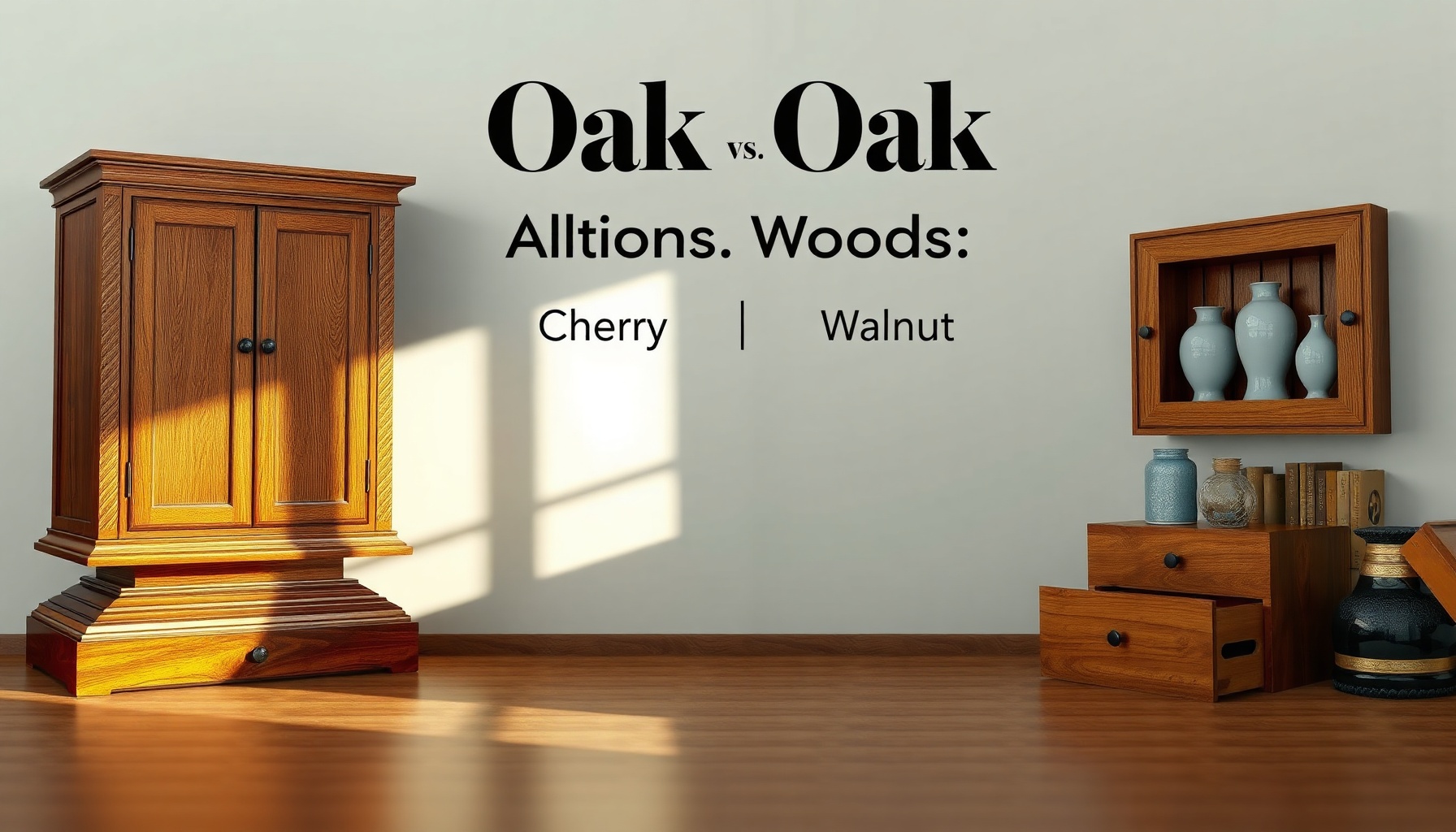
Aesthetic Appeal of Cherry
Cherry wood captivates with stunning visual attributes, making it a preferred choice in furniture and cabinetry. Color characteristics of cherry wood present a beautiful spectrum, ranging from a light pinkish hue to a rich reddish-brown as it matures.
Over time, exposure to light enhances this vibrancy, creating deeper, more lustrous tones that add to its charm.
Grain characteristics feature fine, straight lines that provide a sleek, elegant finish.
Unique grain patterns can vary significantly from piece to piece, ensuring that each item tells its own story. This combination of color and grain contributes to cherry’s lasting aesthetic appeal.
Walnut vs Oak: A Cost Analysis
Comparing pricing options reveals significant differences between walnut and oak.
Walnut typically commands a premium due to its rarity and aesthetic appeal.
Oak, however, is generally more affordable, providing excellent value for those seeking durability in their furniture.
Walnut’s luxurious appearance often justifies its costs, making it a desirable option for high-end projects.
Oak showcases remarkable strength and resistance to wear, thus appealing to budget-conscious consumers who prioritize longevity.
Price Differences
Evaluating price differences also highlights the distinct positioning of each wood type.
Walnut’s costs may range significantly based on market demand, while oak typically maintains a lower price point.
Here are some factors influencing price:
- Rarity: Walnut is less abundant, impacting its cost.
- Durability: Oak’s resilience offers lower long-term maintenance costs.
- Market Demand: Fluctuations can affect pricing for both types.
Value Considerations
As potential buyers navigate these options, the evaluation of cost implications can profoundly impact purchasing decisions.
Understanding these factors leads to wise investments in furniture for homes. Selecting the right material often involves balancing upfront costs with long-term durability and aesthetic appeal.
| Wood Type | Price Range | Durability | Aesthetic Appeal |
|---|---|---|---|
| Walnut | Higher price due to rarity | Moderate | Luxurious appearance and unique grain patterns |
| Oak | More affordable | High durability and wear resistance | Classic look with consistent grain |
Benefits of Mahogany in Furniture Design
Mahogany serves as a premier choice in furniture design due to its outstanding combination of aesthetic appeal and durability. This rich hardwood is renowned for its captivating color and distinctive grain patterns that infuse an upscale ambiance into any interior design.
Furniture crafted with Mahogany boasts remarkable strength and stability, effectively resisting warping and cracking over time.
As a result, pieces made from this resilient wood can sustain their beauty and functionality for decades.
Moreover, Mahogany’s excellent workability allows artisans to execute intricate designs, enhancing overall craftsmanship through smooth finishes that truly highlight its natural characteristics.
When considering the sustainability of wood options, Mahogany ranks high due to its sustainable sourcing practices, ensuring that this precious resource can be enjoyed for generations. The finishing techniques applied to Mahogany contribute to its resistance to wear, making it ideal for both furniture and cabinetry.
Birch vs Oak: Moisture Resistance Insights
The decision between Birch and Oak hinges on their respective performances in humid conditions.
Birch, while attractive, exhibits moderate moisture resistance, often swelling in high humidity yet regaining shape when dried, which may require additional protective finishes for optimal performance in furniture applications. Oak, in contrast, showcases high moisture resistance, establishing it as an ideal choice for varied climates.
Its tight grain structure significantly minimizes water absorption, thereby preventing warping and damage.
Key Comparisons:
- Birch: Moderate moisture resistance; requires extra finishes.
- Oak: High moisture resistance; ideal for diverse climates.
Consequently, when exposed to humidity, Oak outperforms Birch significantly in both durability and structural integrity. This makes Oak the preferred material for achieving long-lasting furniture solutions, ensuring that it remains a staple in the realm of woodworking and furniture design.
- Mahogany is prized for its rich color and unique grain patterns, enhancing the elegance of interior spaces.
- Furniture made from Mahogany can last for decades without significant wear, maintaining both beauty and functionality.
- Oak’s tight grain structure provides superior moisture resistance, making it suitable for various climates and reducing the risk of warping.
- Birch requires additional protective finishes to perform well in humid conditions, while Oak naturally resists moisture damage.
How Teak Enhances Outdoor Spaces
Teak wood is a premier choice for outdoor furniture, celebrated for its outstanding durability. This unique hardwood is naturally resistant to warping, cracking, and splitting, making it ideal for various climates.
The rich natural oils present in teak furniture effectively repel moisture, ensuring longevity even under harsh sun exposure.
Teak’s ability to withstand decay enhances its practicality, especially for outdoor settings.
Homeowners seeking reliability in outdoor furniture often select teak due to its unmatched durability and minimal maintenance requirements. Consequently, investing in teak not only elevates the aesthetic of outdoor spaces but also offers long-lasting performance.
Weather Resistance
Teak is renowned for its weather resistance, which is essential for outdoor environments.
Its natural oils act as a barrier against moisture and UV radiation, ensuring that the furniture remains protected from the elements. Durability is further emphasized by teak’s capacity to endure both high humidity and extreme dry conditions, making it a wise investment for long-term use.
Minimal Maintenance
The maintenance of teak furniture is substantially lower compared to other woods.
Regular cleaning and occasional oiling can keep its appearance stunning and prolong its lifespan.
This minimal upkeep makes teak a preferred material among homeowners who desire both beauty and functionality in their outdoor spaces.
The Impact of Wood Grain Patterns
Unique wood grain patterns significantly enhance the appeal of teak furniture.
Each piece showcases a distinctive grain that adds character and charm, making it a sought-after choice for outdoor décor. The visual appeal is further enriched by the rich golden-brown color of teak, which beautifully complements natural surroundings.
As teak ages, its surface develops an attractive silvery patina, contributing to its desirability. The variation in grain patterns also influences consumer preferences, making teak a versatile option in furniture design.
Visual Appeal
The visual appeal of teak furniture is unmatched.
With every piece showcasing a unique grain, teak provides an aesthetic charm that enhances any outdoor setting.
This remarkable quality ensures that each item is one-of-a-kind, appealing to those who appreciate individuality in their décor.
Uniqueness and Versatility
Distinctive grain patterns and color variations in teak enhance its uniqueness, making it a popular choice for various design styles.
The combination of durability and aesthetic appeal reinforces its status as a unique and visually stunning material for outdoor use.
Whether it’s for furniture design, cabinetry, or flooring, teak proves to be an adaptable choice that meets the needs of diverse consumers.
Teak Wood
- Teak wood naturally resists warping, cracking, and splitting, making it suitable for diverse climates.
- The natural oils in teak provide protection against moisture and UV radiation, enhancing its weather resistance.
- Teak requires minimal maintenance, needing only regular cleaning and occasional oiling to maintain its appearance.
- The unique grain patterns and rich golden-brown color of teak add aesthetic value and individuality to outdoor spaces.
Why Choose Bamboo for Sustainability?
Bamboo stands out as a remarkable choice for those prioritizing sustainable living. Known for its rapid growth, bamboo can reach heights of up to three feet in a single day, establishing it as an exceedingly renewable resource.
This remarkable plant not only absorbs more carbon dioxide but also releases a greater amount of oxygen compared to traditional hardwoods, thus significantly enhancing air quality.
Eco-Friendliness of Bamboo
The eco-friendliness of bamboo lies in its minimal environmental impact when sourced responsibly.
Ethical sourcing practices, such as responsible harvesting methods, play a vital role in maintaining ecological balance.
Many suppliers in the bamboo industry emphasize sustainable practices that foster community welfare and uphold fair trade principles.
- Supports biodiversity by providing habitats for various species.
- Encourages soil health through its extensive root systems.
- Reduces the need for chemical fertilizers and pesticides due to its natural resistance to pests.
The Importance of Sourcing Practices
Proper sourcing practices are essential to ensure the sustainability of bamboo products. Responsible harvesting emphasizes not only the ecological benefits but also the social responsibility of businesses involved in this industry. Making informed choices assists eco-conscious consumers in supporting suppliers who contribute positively to both the environment and local communities.
Choosing bamboo not only reflects a commitment to environmental sustainability but also denotes a choice that aligns with ethical consumption. This sustainable option illustrates a forward-thinking approach, making it an ideal selection for those who value both durability and environmental impact.
Bamboo Sustainability
- Bamboo can grow up to three feet in a single day, making it one of the fastest-growing plants on Earth.
- It absorbs more carbon dioxide and releases more oxygen than traditional hardwoods, improving air quality.
- Bamboo’s extensive root systems help prevent soil erosion and promote soil health.
- Responsible harvesting of bamboo supports local communities and adheres to fair trade principles.