
Appreciating the natural elegance of oak furniture begins with selecting the perfect oil. The top oils for oak furniture not only enhance its beautiful grain but also act as a protective coating, significantly extending its lifespan.
Various natural oils, such as linseed oil and tung oil, penetrate deeply, offering a revitalizing oil treatment that boosts durability and shine.
Regular application can help maintain that stunning, rich finish while protecting against everyday wear and tear.
Embrace these oils for a lasting, beautiful wood finish that keeps your furniture looking exquisite.
Click here to learn more about: www.globalvisioncompany.com
Choosing the Right Furniture Oil
Selecting the right oil is essential for preserving the beauty of oak furniture. Different types of furniture oils such as linseed oil, tung oil, and mineral oil possess unique properties that cater to various wood characteristics.
Each option plays a role in grain enhancement, providing benefits like waterproofing and UV protection.
To determine compatibility with oak, a practical method involves testing oil absorbency. Here’s how you can conduct a simple absorbency test:.
- Apply a drop of furniture oil on a concealed area of the oak.
- Observe how quickly the oil soaks in.
- If it penetrates swiftly, this indicates readiness for treatment, ensuring effective wood nourishment and longevity.
Selecting the right oil not only beautifies your furniture but also protects it.
Key types of oils to consider:.
- Linseed Oil: Offers a deep penetration and a satin sheen.
- Tung Oil: Provides a durable clear finish with excellent waterproofing.
- Mineral Oil: An affordable option for regular furniture maintenance.
- Teak Oil: Ideal for outdoor oak furniture, providing a nourishing treatment.
- Walnut Oil: Enhances color while offering protection against wear.
Understanding these options can simplify the process of selecting the perfect oil treatment for your oak furniture, ensuring both beauty and functionality.
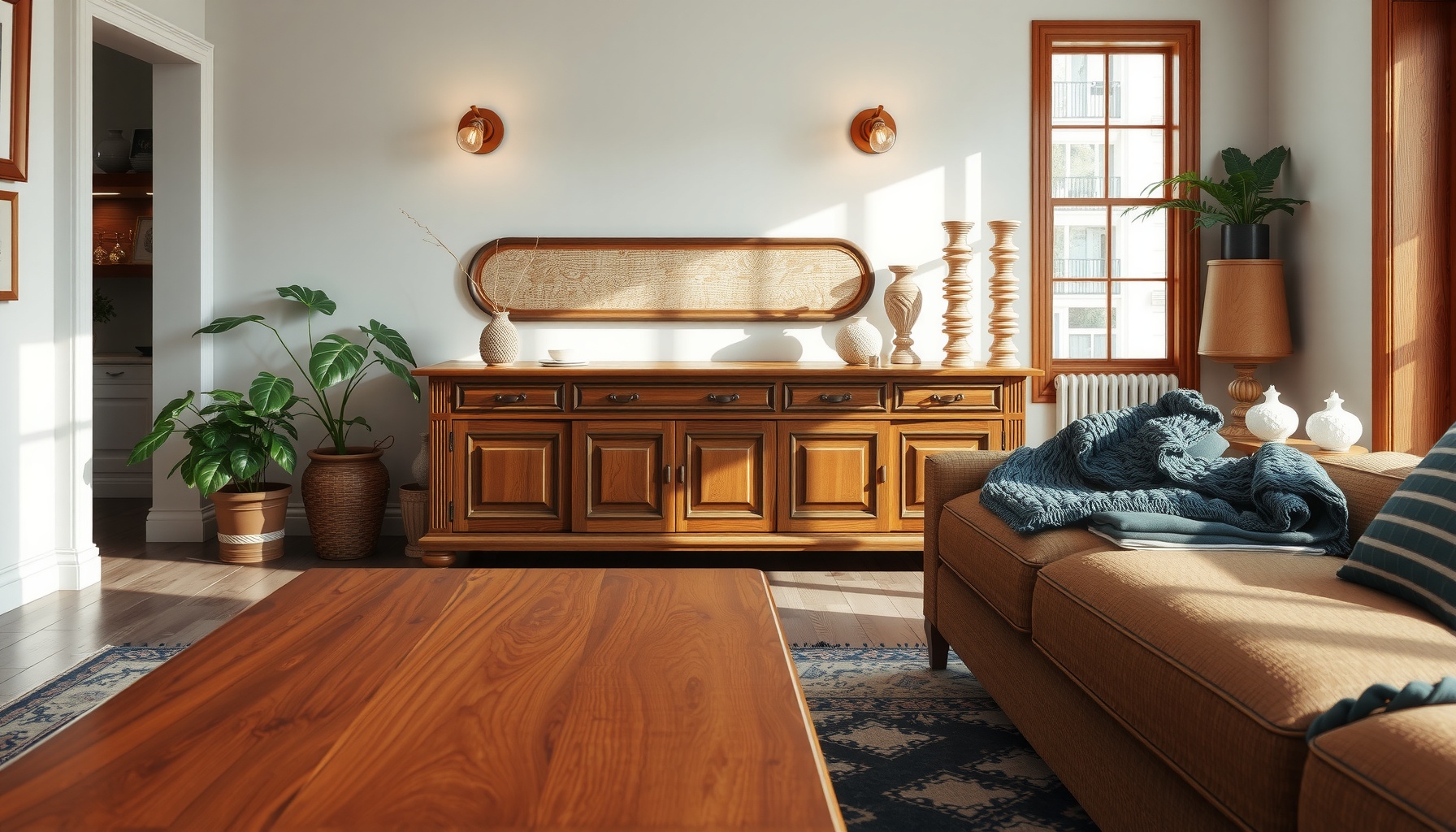
How to Apply Natural Oils
Applying natural oils correctly can significantly enhance your oak furniture’s lifespan and appearance. Initially, surface preparation is essential; ensuring the surface is clean and sanded guarantees an even absorption of oils.
Start by cleaning the surface with a damp cloth to remove dust and debris.
Next, sand the wood using fine-grit sandpaper to create a smooth layer.
Once prepped, apply oil by pouring a small amount onto a clean cloth, then spread evenly in the direction of the grain. Allow the oil to penetrate for 15-30 minutes before wiping off any excess.
Let the wood cure for 24 hours before applying additional coats. To ensure optimal results, choose the right application tool—brushes work well for details while cloths cover larger areas efficiently.
Benefits of Linseed Oil for Oak
Linseed oil serves as an excellent choice for homeowners looking to enhance oak’s natural beauty and durability.
This nourishing oil brings out the rich color and intricate grain patterns of oak, making it visually stunning.
It provides a strong protective coating that contributes to the wood’s longevity.
Unlike synthetic alternatives, linseed oil penetrates deeply, hardening within the wood for effective protection rather than just forming a surface layer.
For best results, allow each layer to dry completely for 24 hours before adding another.
Humidity levels can impact drying times, so adjust your application accordingly for optimal outcomes.
Choose this oil for a lasting and beautiful finish that not only enhances aesthetics but also nurtures wood with organic care.
Natural Oils for Oak Furniture
- Natural oils enhance the wood’s appearance by highlighting its color and grain patterns.
- Linseed oil penetrates deeply into the wood, providing long-lasting protection compared to synthetic alternatives.
- Proper surface preparation, including cleaning and sanding, is crucial for even oil absorption.
- Humidity can affect drying times, making it important to adjust application conditions for best results.
Exploring Tung Oil Advantages
Tung oil is renowned for its exceptional water resistance, making it a superb choice for kitchen furniture. Specifically, its protective coating forms a barrier against moisture, effectively preventing water damage.
Homeowners have come to appreciate the long-lasting qualities of tung oil, as it outperforms the durability of linseed and other common oils.
For those aiming to achieve a matte finish, thinning the tung oil with a solvent before application is highly recommended.
Utilizing a lint-free cloth allows for even distribution, while permitting adequate drying time maximizes the finish’s effectiveness. Ultimately, tung oil serves as an excellent option for enhancing the beauty and longevity of oak furniture.
Water Resistance Properties
The water resistance properties of tung oil create an effective barrier against moisture, making it ideal for kitchen furniture, where spills are common.
This protective coating ensures that the wood remains intact, preventing warping and damage over time. In comparison, many other oils lack the same level of waterproofing, making tung oil a preferred choice.
Long-lasting Qualities
When comparing furniture oils, tung oil stands out due to its lasting durability.
It offers a longevity that surpasses many natural oils, including linseed oil.
By choosing tung oil, homeowners invest in a wood finish that requires less frequent reapplication, ultimately saving time and resources in furniture maintenance.
Achieving a Matte Finish
For those interested in a matte finish, thinning tung oil with a solvent is key.
Applying with a lint-free cloth helps ensure an even distribution. Allowing adequate drying time between coats maximizes the finish’s effectiveness, creating a beautiful appearance on the wooden surface.
The Role of Mineral Oil
Mineral oil plays a significant role in food-safe applications, especially for cutting boards.
This non-toxic oil ensures safe contact with food, making it highly popular among chefs and home cooks alike. Cleanup is simple, allowing for easy maintenance without extensive care requirements.
Specific Uses of Mineral Oil
Used primarily for treating cutting boards, mineral oil acts as a wood conditioner that maintains the integrity of the wood.
This wood nurturing product prevents drying and cracking, keeping the boards in optimal condition for food preparation.
Ease of Reapplication
Reapplication of mineral oil finishes is straightforward and essential for maintaining their effectiveness.
For best results, it is advisable to reapply oil every few weeks, depending on usage.
Regular applications help ensure that the surface remains protected and nourished.
Keeping Finishes Fresh
To keep mineral oil finishes looking vibrant, a gentle scrub followed by reapplication can rejuvenate the surface, revitalizing its appearance. Avoiding harsh cleaning agents is essential to preserving the finish, ensuring your wooden surfaces stay well-maintained and appealing over time.
Tung Oil and Mineral Oil
- Tung oil’s water resistance can prevent warping and damage, making it ideal for kitchen furniture.
- Compared to linseed oil, tung oil requires less frequent reapplication, saving time and resources.
- Mineral oil is a food-safe option that maintains the integrity of wooden cutting boards, preventing drying and cracking.
- Regular reapplication of mineral oil every few weeks ensures that wooden surfaces remain protected and nourished.
Protective Coatings for Wood
Choosing the right protective coating for wood is essential for both aesthetics and durability. Enhancing the natural beauty of the wood while offering lasting protection is crucial for maintaining surfaces.
Various coatings, such as varnishes, lacquers, and oils, can be selected based on the preferred look.
For example, a high-quality coating can effectively highlight the wood’s grain and color.
A common mistake to avoid involves selecting a coating incompatible with an oily finish; therefore, testing product compatibility beforehand is essential. After the application of oils like linseed oil or tung oil, it is necessary to allow at least 24 hours before applying a protective layer, ensuring proper adhesion and finish quality.
Tips for Oak Preservation Techniques
Taking proactive steps to protect oak furniture promotes both its longevity and visual appeal.
Using coasters and mats significantly prevents moisture damage; regularly monitoring humidity levels in your home helps avoid warping. Routine maintenance that includes cleaning and conditioning with nourishing oils, such as walnut oil, ensures oak remains vibrant and resilient.
An innovative suggestion for seasonal care is to utilize breathable covers in winter, which protect against harsh weather conditions.
By adjusting cleaning practices according to temperature and humidity fluctuations, you can effectively enhance the lifespan of your oak furniture.
Preventing Moisture Damage
- Always use coasters on surfaces to avoid water rings.
- Employ mats under plants or beverages to shield against spills.
- Ensure that indoor humidity levels stay balanced to prevent wood warping.
Importance of Regular Maintenance
Maintaining oak furniture through periodic cleaning and conditioning plays a vital role in its durability. Utilizing quality wood conditioners replenishes natural oils, which provides wood nourishment. Routine application of penetrating oils aids in deep conditioning and enhances the protective finish.
Seasonal Care Innovation
During winter months, utilize breathable covers to safeguard your oak furniture from the elements. Consider adjusting oil applications based on seasonal demands to ensure that wood remains encapsulated in protective oils. Keeping the wooden surfaces well-cared-for enhances their overall allure.
Protective Coatings and Oak Preservation
- High-quality coatings can enhance wood’s natural grain and color, improving aesthetics.
- Regular maintenance, including cleaning and conditioning, can significantly extend the lifespan of oak furniture.
- Using coasters and mats can prevent moisture damage, which is crucial for maintaining wood integrity.
- Breathable covers in winter protect oak furniture from harsh environmental conditions.
Effective Wood Nourishment Strategies
Nourishing wood enhances its beauty while significantly extending its lifespan. Wood finishes are essential for maintaining balanced moisture levels, which helps prevent drying that can lead to cracks and splits.
Regular treatments with nourishing oils, such as linseed oil and tung oil, effectively replenish vital moisture, thereby greatly impacting wood longevity.
Integrating Nourishment into Maintenance Routines
To ensure the best outcomes, schedule wood nourishment treatments every three months.
Incorporating this practice into your cleaning routine not only enhances furniture care but also ensures timely maintenance.
Here are some practical steps to consider:.
- Assess environmental conditions regularly, including humidity levels.
- Use a wood conditioner to guide timely applications.
- Monitor the absorption of nourishing oils and protective coatings closely.
By paying attention to these details, you can provide your wooden surfaces with the care necessary for long-lasting results.
The Impact of Treatments on Wood Longevity
Applying a protective finish, such as a clear finish or satin sheen, can greatly enhance the durability of wooden surfaces. Consider these options:.
- Oil-based treatments provide deep conditioning by penetrating the wood.
- Natural oils such as walnut oil and teak oil offer unique benefits for specific wood types.
- Regular oil application not only beautifies but also revitalizes the wood, ensuring its lasting appeal.
These nourishing oils create a barrier against environmental factors, enhancing the wood’s resilience over time.
Wood Nourishment
- Regular application of nourishing oils can increase wood’s lifespan by up to 50%.
- Wood finishes can reduce moisture absorption by up to 80%, preventing damage from humidity.
- Oil-based treatments can penetrate wood fibers up to 1/4 inch, providing deeper protection.
- Natural oils like teak oil can enhance the natural color and grain of specific wood types, improving aesthetics.